
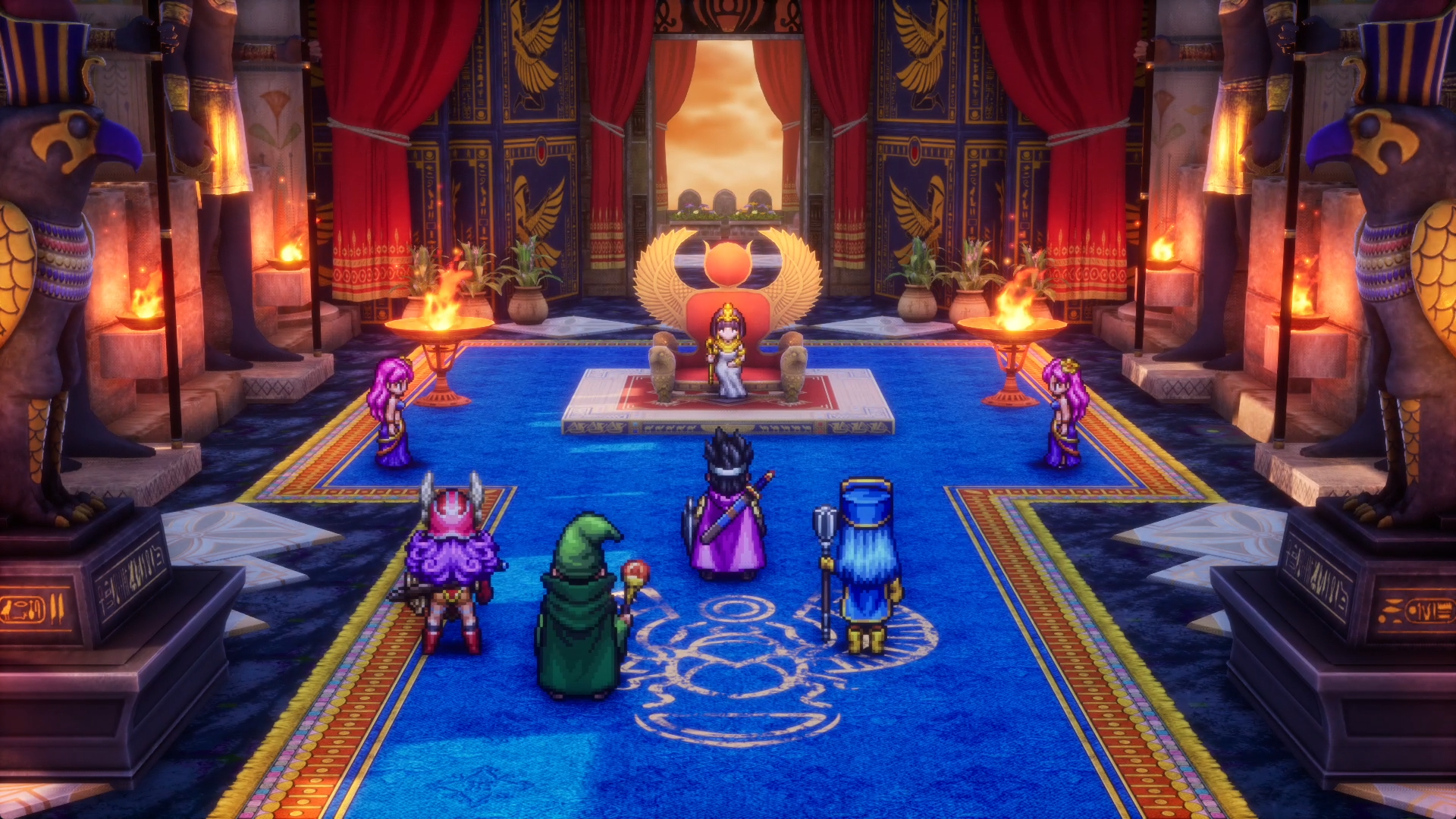
So often in a RPG, our overall experience of the game can be impacted by the choices made at the very beginning. Just imagine what it would be like trying to enjoy the original Final Fantasy with a team of Black Belts compared to a mix of fighting and magic. When starting your journey in Dragon Quest III HD-2D Remake, choosing the right roles for your party is crucial for a balanced and effective team. Here’s a guide to help you make the most optimal choices:
Understanding the Basics of Dragon Quest III Classes
- The Hero: The main character is your constant and cannot be changed. Regardless of the type chosen, the hero is balanced mix of warrior quality fighting abilities and low level magic.
- Vocations (Classes): In Dragon Quest III, you can customize your party members by choosing their vocations. Each vocation has unique strengths, weaknesses, and skillsets.
- Party Balance: A well-balanced party should ideally have a mix of damage dealers, healers, and support characters.
Optimal Role Choices
Here’s a breakdown of recommended vocations and their roles in the party:
-
Warrior
- Role: Physical Damage Dealer
- Strengths: High attack power, can equip heavy armor and weapons.
- Why it’s good: Warriors provide consistent physical damage throughout the game, making them essential for taking down tough enemies.
- Why it’s bad: The high price of equipment can restrict the overall effectiveness of the warrior.
2. Priest
- Role: Healer/Support
- Strengths: Access to healing and support spells, can revive fallen allies.
- Why it’s good: A Priest is crucial for keeping your party alive, especially during challenging battles. Their healing and support magic can turn the tide of battle.
- Why it’s bad: Priests cannot equip heavy armor and have are more limited offensively.
3. Mage
- Role: Magical Damage Dealer
- Strengths: Powerful offensive magic, can exploit enemy weaknesses.
- Why it’s good: Mages provide high burst damage and can target enemy weaknesses, making them valuable for quickly eliminating threats.
- Why it’s bad: The proverbial glass cannon. Mages deal high damage but can take limited damage.
4. Martial Artist
- Role: Physical Damage Dealer/Speed
- Strengths: High agility and critical hit rate, powerful unarmed attacks.
- Why it’s good: Martial Artists offer a unique approach to combat with their focus on speed and critical hits. They can also act as a secondary damage dealer or support character with their high agility.
- Why it’s bad: With limited access to weapons and armor, the Martial Artist relies mostly on claws and light armor.
5. Thief
- Role: Status Effects/Speed
- Strengths: High agility, but most useful outside of combat.
- Why it’s good: A Thief can reduce the enemy encounter rate and spot hidden treasures.
- Why it’s bad: Aside from status attacks, not as useful in battles.
6. Merchant
- Role: Field Support
- Strengths: Increases the amount of gold received in battle
- Why it’s good: The Merchant is able to make a Service Call in the field, providing shop access or Inn services.
- Why it’s bad: Less useful in combat, with average attack and health.
7. Gadabout
- Role: Wildcard
- Strengths: More Class Change Options
- Why it’s good: The Gadabout is a strange class, the often act on their own and can charge attacks. Mostly used as a stepping stone to a better class.
- Why it’s bad: Can waste turns and even damage themselves.
8. Monster Wrangler
- Role: Jack of All Trades
- Strengths: Learn abilities from monsters they encounter, can be powerful late in the game
- Why it’s good: Healing is not effected by magic blocking, easier to obtain monsters for the arena.
- Why it’s bad: Need to find and learn the abilities before they can be used.
Recommended Party:
- The Balanced Approach: Hero, Martial Artist, Mage and Priest. This party has a little bit of everything: Physical attacks, magical attacks, and healing.
- The New Balanced Approach: Hero, Monster Wrangler, Mage and Priest. The same balanced approach when it comes to offense and defense, but with a class newly added to the Remake.
- The Covers All Bases Approach: Hero, Thief, Monster Wrangler and Priest. By limiting magical offense, you gain many useful abilities outside of combat.
Additional Tips:
- Personalities: Each party member is assigned a personality based on the seeds chosen. The personality determines how the stats of the character grows as they level up. Don’t stress out if you don’t get the personality you were hoping for. Books and items found throughout the game can change these values throughout your journey.
- Experiment with different vocations: Don’t be afraid to try out different vocations and see what works best for you. You can change vocations later in the game, so you’re not locked into your initial choices.
- Pay attention to equipment: Equipping your party members with the right weapons and armor is just as important as choosing the right vocations.
Choosing an optimal party can be stressful, but with a little bit of preparedness, you’ll be well on your way to assembling a powerful and well-balanced party in Dragon Quest III HD-2D Remake to ensure a joyous experience.


