Dragon Quest VII Reimagined on Nintendo Switch 2 Review
As featured in the March Issue of Mage Magazine, Paige Chamberlain reviews Dragon Quest VII Reimagined.
By Paige Chamberlain
I hadn’t gotten around to playing Dragon Quest VII because I’d heard it was quite long, and I only recently warmed up to the idea of playing lengthy RPGs every so often. However, I managed to beat this version in 41 hours and 41 minutes. So, it wasn’t actually that long, for an RPG, anyway.
I know for a fact, as it was publicly stated well before release, that some of the islands weren’t going to make it into this version. Given that the entire premise of the game is discovering that yours isn’t meant to be the only island in the world, and travelling into the past to save others from doom so they reappear in the present, it seems like an odd choice to decide some of them don’t deserve to exist at all. Luckily, I have no basis of comparison to know what those stories were like, although there were a few times I could feel the trimmings. On one of the earliest islands, I was asked to retrieve an item I already knew of, and in fact, already had because the game made me get it prior to arriving there. I figured that was definitely a change.
Initially, I thought the episodic/vignette style didn’t give me enough time to actually experience the emotions of these islands, but it was mostly just the first few that felt short. What I and others mean by the game’s “episodic nature” is that the stories of the islands are mostly unique calamities, one place might be fighting an automaton army, while another deals with the sins of its past. Some stories surprised me. I didn’t always get the resolution I was expecting.
For a first-time player, this was all fine, and the game was plenty enjoyable. However, I feel that with the general adjustments to gameplay, they didn’t really need to cut the islands. I saw a 3DS trailer the other day and found out there was a whole monster-raising area, and now I feel a bit cheated. I wouldn’t have minded spending another twenty hours there. One island allowed me to make an actual choice that changed what happened in the present. Obviously, I tried both outcomes thanks to saves, but I somewhat preferred the initially sadder one.
I feel like there could’ve been more of that, which makes me suspect that even the original version of the game didn’t do everything it wanted to.
The typical turn-based combat is very fun. I stuck with the normal difficulty, which many complained was too easy. I did find that towards the end of the game, the bosses weren’t complete cakewalks like the earlier ones. When I decided to try “Hard Mode,” I unfortunately chose one of the hardest optional monsters, so I made a retreat and didn’t try it again later.
The only time I used auto-battle was during a segment where skills were disabled; it made more sense to use that than to press the exact same button several times. Other reasons this game feels easier include more frequent healing points and the fact that you instantly revive with 1 HP outside of battle. For me, the lack of “coffin dragging” is a loss of what makes Dragon Quest what it is. Pair that with being able to use Zoom anywhere (a change made back in Dragon Quest Treasures), and while the game isn’t devoid of the series’ usual charms, it’s enough to make me worry. Far too many series are doing this lately, and now I’m sounding like a broken record.
Regarding the job system: you can equip two jobs at a time, titled “Moonlighting,” which really helps unlock advanced jobs faster. I changed jobs frequently but sometimes had to rearrange them for boss fights when I realized I didn’t have any good healing spells or specific attacks. I don’t have much experience with RPG job systems, but I thought it was strange that I couldn’t keep any skills from the jobs once they were unequipped. Apparently, in prior versions, you could keep skills from lower-ranked jobs but couldn’t “moonlight,” so I guess they didn’t want to make it ultra-easy.
Enemies appear on the overworld, though once you run into one, a few more buddies will join the fray.
I found this helpful when fully exploring dungeons, especially since some had puzzle elements. Aside from being able to run around some foes, the respawn rates let me explore a bit before they reappeared.
Further into the game, however, enemies respawned much quicker, making it hard to tell where I had already been. I liked the variety in dungeons, ranging from long and stressful to very short. One of the later ones was entirely different in how you navigated it; I wasn’t expecting that at all, especially so close to the end.
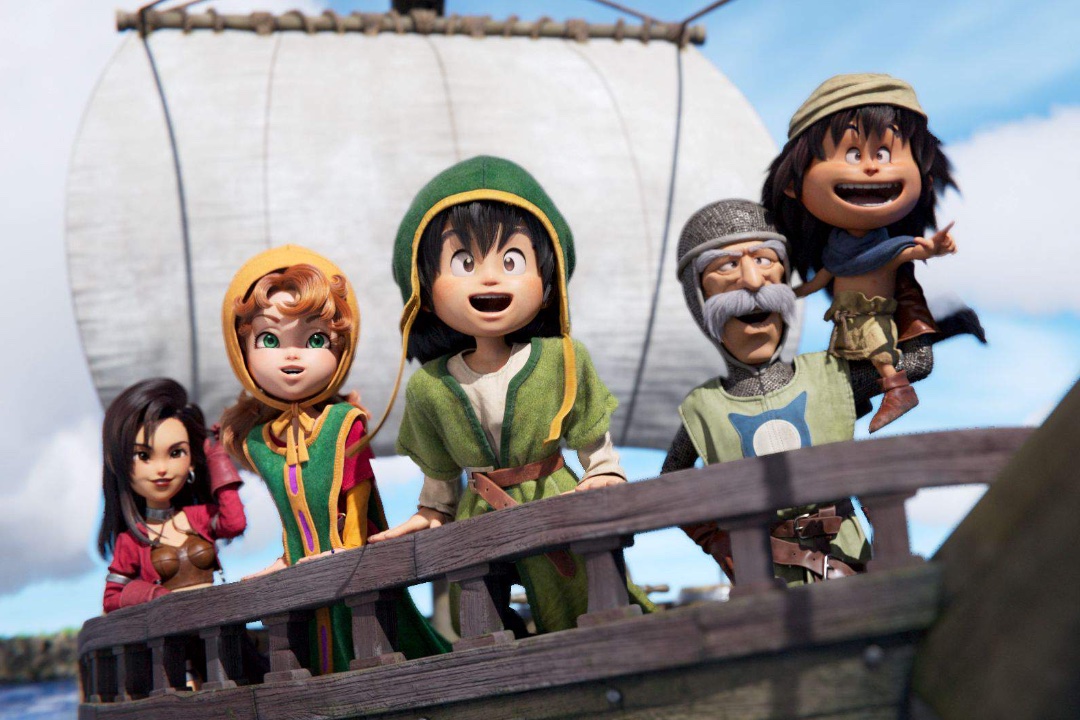
As for the party members, there weren’t any I disliked, although I did rejoice when I could remove Ruff from my party as his winning animation was grating. I grew attached to the characters and unexpectedly got emotional when recruiting a particular addition. I liked having party chat, but half the time they were just telling me what to do instead of reacting to events, which was lame. Without spoiling anything the promotional material didn’t already cover, one of the new segments felt unnecessary, more like fan service for returning players.
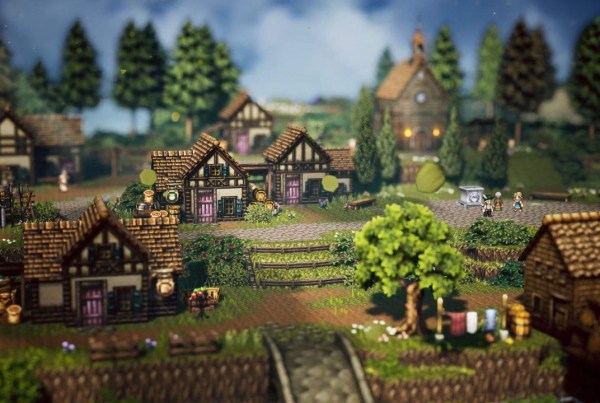
The main appeal of the remake, other than being on modern platforms, is how beautiful it is. With a diorama-style look featuring 3D models based on handcrafted dolls, this blend of tangible art with digital models has been popular lately, and I don’t mind it. I do, however, mind the loss of different outfits for jobs. I know that was a feature in the 3DS version, and given there are only five party members and a limited number of jobs, it feels lazy—especially when they made paid DLC outfits.
The environments look wonderful, and certain enemies look great, especially the metallic ones. One thing I noticed was the lack of monster variety; certain mini-bosses were just turned into generic units. Those bosses apparently had unique models in other versions.
There are also some obviously new or re-done cutscenes where the perspective changes. The sideways view used when recruiting Ruff seemed like it would be a recurring style, but it never happened again. We also have voice acting here and there, which is good, though they were definitely slacking on the Princess’s lisp.
This game doesn’t really feel like a replacement, and it’s certainly not a “Definitive Edition.” I’ll be trying out the 3DS version at some point in the future but maybe not the PS1 original though, as it’s a bit too ugly for my tastes.
While this is an enjoyable way to play for newcomers or veterans, there are still minor gripes that a first-time player might pick up on. Regardless, the characters, world, and dungeons are all fun to experience. If you like Dragon Quest, you should play it.