Pokemon Pokopia on Nintendo Switch 2 Review
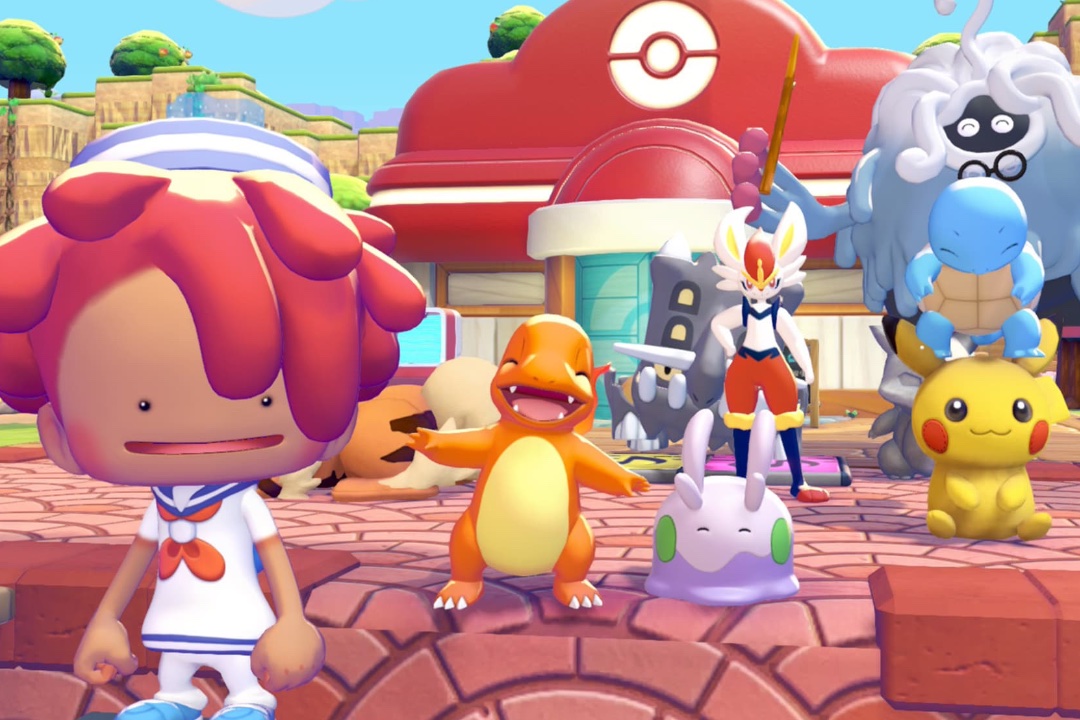
As featured in the April Issue of Mage Magazine, Paige reviews Pokemon Pokopia, a successor to the builders series of games, this time from Nintendo.
By Paige Chamberlain
When it comes to “cosy” games I find that any time I put past the seventy hour mark is usually when I should’ve stopped playing…with Pokemon Pokopia I have now passed that time and am nearly-almost-sort-of-kinda done with the game.
Pokemon Pokopia is a sandbox decoration and monster collecting game with some life simulation elements. There is no combat, but you do have a story to progress that will give you access to further areas, abilities, recipes and of course, Pokemon.
It starts out with you waking up and shaping yourself to resemble your trainer before running into an old Tangrowth in a cave who says he’s seen neither human nor Pokemon for a long time. Upon leaving the cave you find an exhausted squirtle and you use your innate ditto powers of mimicry to copy the water gun ability and give him some hydration. From there you resolve to restore the natural environment, as the first area is rather dry–not only through your own restoration efforts but by creating habitats to attract new Pokemon who may have quests or abilities to help. These habitats start out as simple patches of grass but later on might require a near complete set of furniture or piecing together a fossil. Just as you have your own job skills, there will be some you’ll need to ask other Pokemon to help you with, such as heating up furnaces to smelt ore, or temporarily generating electricity for an object.
Ditto, on the other hand, will learn a variety of abilities such as being able to water soil and crops, till land, break apart blocks and so on. Some of these abilities will actually give you a full body transformation and I have to note the Graveler one is super useful, especially with the right cooking. The world isn’t quite a voxel one but any piece of land or water (and some walls and flooring) comes in the form of blocks that can easily be restored back into place. Some structures will require you to enlist the help of other Pokemon to build them which can be power sources, homes that you could make yourself with blocks, or more specific prefab buildings that have a separate load zone for their interior.
Of course these towns or biomes you visit (separated via gates and weirdly misleading boundaries) are finite in resources so you can ask Drifloon to take you to a randomly generated island once a day to acquire more blocks (and pinch some random items). There are far, far too many types of blocks: I know the different biomes get their own grasses but do they also need several other rock and sand types as well? My storage is all BLOCKS.
The writing is quite cute and can be funny at times, and while most Pokemon have set personality groups, they do get some unique dialogue and even specific interactions with each other and are rather fun to run into. Duskull must be punished for his crimes. Each area will have a main objective to get through once you develop the town a bit from bringing back rain or just having a good old shindig. A neat feature heavily advertised was the unique Pokemon such as Mosslax or Smearguru; these Pokemon are variations on regular ones and have a story reason for being different. I was a bit disappointed that there was only one extra one besides what they had already revealed, and three of them are strictly from the same town. One thing to keep in mind (with the exception of Mosslax probably, he’s kinda stuck there) is that you can get any Pokemon to follow you and move them somewhere else including another town. A major task you’ll need to do is to raise the environmental levels, which is merely done by asking Pokemon about their comfort levels and giving them what they require. The only Pokemon I really bothered with giving housing were those who wanted somewhere dark or dry.
The story around this setting is mostly told via random notes you’ll find scattered in the world (which Ditto can’t read, although you may find photos to emulate and get new looks to try on). I won’t spoil too much in case you don’t know but it definitely has an environmental focus, which is very funny when I’m building furnaces to generate an entire town’s worth of electricity or deliberately polluting areas for certain Pokemon. I managed to get through the main story in a swift twenty five hours, as any time I spent playing around usually ended up contributing to the main goals. That said, the game has plenty more content in the form of sheer number of recipes and Pokemon to collect.
This is really only one of the major downsides to the game. The RNG in Pokopia is utterly terrible; for example, the fossil pieces are required to get certain Pokemon and these come from glowing blocks that need to be broken, but you may also get artefacts that need to be appraised instead, and it is mostly random which fossil piece you get so you might find yourself getting almost ten right wings before the game finally gives you a left one.
However, when it comes to the mysterious slabs, you will get a unique one each time until you make the complete set. Any recipes that aren’t tied to quests or the environment level can be found through sparkling ripples, except sometimes you only get an item you might already have instead. You can also buy a couple of recipes from the daily rotation in the store, although as you get further into the game you may find yourself running rather low on money. The only way to get money in this game is through challenges and you might start running out of those as you get further on in hours. There is also the weekly stamp card that cashes in but I still have so many expensive recipes I can’t unlock and I feel like I’m nowhere close to getting them all. This is especially egregious in a game about creating and decorating to your heart’s content. Fortunately, there is one handy-dandy way to get around these issues: as you rebuild Pokemon centres you’ll find on the inside a 3D printer that works as you might expect.
You can take object photos with your camera and use regular or rare Pokemetal ingots to print these items, and you can go to dream islands of other players and take photos of things they have that you do not, which I HAD to do to get the final type of berry tree.
Pokemon Pokopia also has online multiplayer (and gameshare and adhoc play) including Cloud Islands which act as mini-servers that don’t require any particular user to be online for others to access it. While it is a super neat feature, you cannot transfer items between your main game and the cloud islands, making getting the required resources to make what you want (or spawn your favourite Pokemon) a lot harder than it has any right to be. They even prevent you from using the 3D printer with photos you’ve taken elsewhere.
You can visit your own friends’ worlds but are only allowed to impact the environment in Pallet Town which is a large area with no set features or quests (besides helping Eevee find her friends). You can play a few mini-games with either friends or other Pokemon such as jump-rope and prop-hunt hide and seek.
I did expect the run time of the game to last a bit longer, which is how I finished it in four days, and I don’t think it would have killed them to create at least one more biome, such as a snowy one; given the game is about living in a post multi-environmental disasters world, there probably just aren’t any. Pokopia does have a live service aspect with a few minor events having already occurred. The first involved a new resource spawning in the dream islands that could be exchanged for unique event furniture and flowers, which then in turn was used to create habitats for new Pokemon. Whereas the April Fool’s event merely rewarded a fake Sudowoodo item.
I think these minor events are a good way to keep players coming back to the game and soon might be the only reason I clock back in, unless any friends or family want to play with me. I’m not a super creative builder although I have adored looking at people’s doll house builds and have tried my hand at making a 5×5 diorama. Still, I got a decent amount of enjoyment out of the game even if I have no desire to properly restore the towns I encountered.
I’m currently trying to “catch ‘em all” and have less than ten to go. I did give up and look up what habitats I still need to make since the hints weren’t spawning as much. The spawning itself could be an issue with players who aren’t willing to mess with their console’s time as certain Pokemon are nocturnal and will only initially appear in the night or vice versa. Thankfully, there are no seasons but there is rain which does also impact the spawn conditions and comfort levels of some Pokemon.
I adore the art style of this game, even the freakish faux human ditto is endearing so long as I keep its eyes covered up. The boxy style isn’t too harsh as all the items and nature keep their form. As a Pokemon fan I also love the soundtrack, especially as you can collect CDs and play alternate arrangements of different tracks.
The game controls pretty great too as long as you swap the jump and run buttons but then I didn’t realise I could run when transformed as the changing back button was the same one (you just have to hold it).
As numerous and serious as my complaints are, make no mistake, I’ve had an absolute blast playing this game and gaining a new found love for Girafarig. Even in the more grindy stages as I am now, I got completely sidelined from writing this review trying to create the last few habitats and it helped me wind down from work completely. The attention to detail in regards to the world of Pokemon is top notch and the game is clearly made with love for the series as a whole, right down to every thing you learn technically being a named move from the main games. There are many other little details I have neglected to mention for the sake of seeing it yourself. Pokopia is a must play for anyone looking for a relaxing time in the Pokemon world with the occasional bump going down the blocks.
Review Score