
The Thirsty Mage Podcast • Episode 346
How Valkyrie Profile Led to the Success of Final Fantasy Resonance
Listen & Subscribe: Apple Podcasts | Spotify | YouTube | RSS Feed
Final Fantasy Resonance has caught the collective attention of the video game community, but how exactly did this re-imagining of a mobile game find such success?
In this episode, I take a dive into the development history of the latest Final Fantasy game from Square Enix, and chart a path from all the way back to a 1999 PlayStation RPG.
Episode Transcript
Click to expand full Episode 346 transcript
Final Fantasy Resonance has caught the collective attention of the video game community, but how exactly did this re-imaging of a mobile game find such success?
In this episode, I take a dive into the development history of the latest Final Fantasy game from Square Enix, and chart a path from all the way back to a 1999 PlayStation RPG.
Greetings and welcome to The Thirsty Mage, the podcast that's never missed an opportunity to cover a Final Fantasy title. I'm your host, David Lloyd, and in this episode I take a deeper look into the development of Final Fantasy Resonance and explain how its structure actually originated from Valkyrie Profile, an Enix game released on PlayStation back in 1999.
A quick note, I will refrain from getting into anything that would encroach on spoiler territory on any of the games discussed here. So for those of you still on the fence or who haven’t gotten around to starting Resonance, you may listen on without fear. Also, many Japanese names are featured in this episode, and I want to preemptively apologize for likely mispronouncing each one.
Like a great Phoenix, Final Fantasy Resonance rose from the ashes of the free-to-play mobile title, Brave Exvius, a game initially released in 2015 that shut down as of 2024. While the characters and story may be directly pulled from Brave Exvius, the combat and gameplay can actually be traced back through a couple of different games until we reach the Tri-Ace developed, and Enix published game, Valkyrie Profile.
So how do we get from Valkyrie profile to Final Fantasy Resonance?
et’s start with Brave Exvius.
Developed by Alim, Brave Exvius was Square Enix’s very successful Final Fantasy IP in the mobile space. From its release in 2015 to its closure in 2024, Brave Exvius is estimated to have earned roughly $900 million in revenue, with its peak years occurring during 2017 and 2018. A pretty decent chunk of change for a single title.
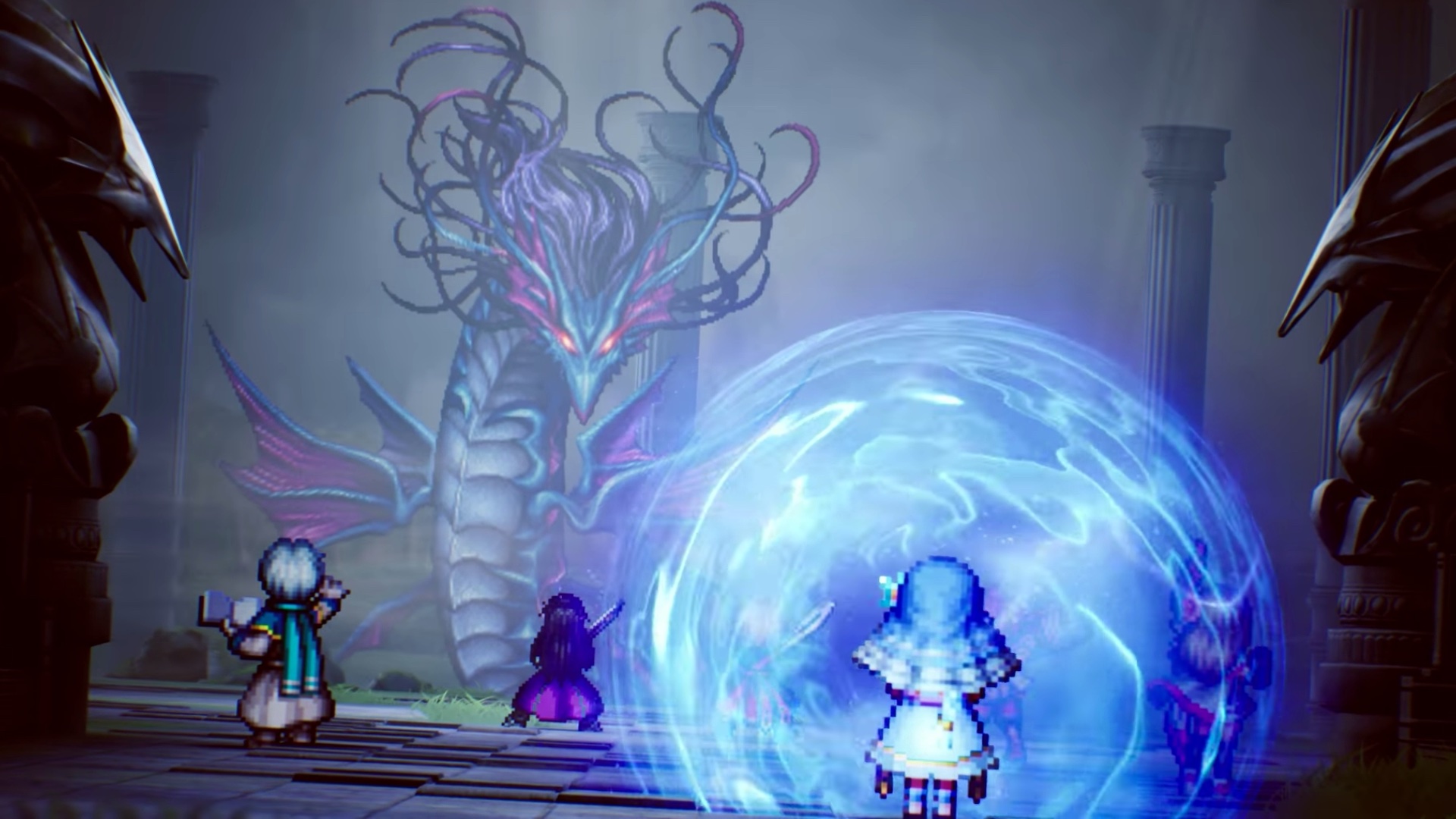
The combat system was fairly simple, at the beginning of combat, the player selects an action for each of the party members and Depending on the type of action, these could be chained into stronger combinations to do more damage and work towards building up a limit break meter. Once that meter is full, one of the heroes can unleash their ultimate attack, the animations of which we’ve seen recently in Resonance as done by the visions.
The day to day gameplay of Brave Exvius was quite different from what we’ve now seen in Resonance. A typical session started with a gacha pull that included different items and heroes.
After selecting the heroes to include on your team, the party would take on enemies in battles to progress through an episodic story that you’d get a little piece of per day. The ultimate goal of Brave Exvius was to encourage players to check in daily, and hopefully, pay for additional hero pulls, energy refill and the typical pay to win monetization that goes along with a mobile title.
Thankfully, that gameplay was overhauled thanks to the insistence of the development team, according to Final Fantasy Resonance producer Keisuke Nakashima. When the idea was initially pitched to Square Enix to bring the mobile game to consoles, the executives preferred a direct port to reduce both development time and costs. According to Nakashima, they were able to convince executives that the gacha mechanics were limiting the fan base and that a true console-like experience would satisfy a much wider audience.
He appears to have been correct.
This console experience led to a fusion of the structure and design of Octopath Traveler but with the combat style of Brave Exvius, notably, that each party member would get a turn to attack and that a larger ultimate attack could be triggered with a certain combination of moves.
These combat mechanics were designed by the developer of Brave Exvius, Alim. A company that had already found success with their own mobile title, Brave Frontier.
Some quick history of Alim, the company got its start in 2013 with the aforementioned, Brave Frontier. The game is notable for being one of the very early success stories of a turn-based RPG releasing on mobile. It had an incredible 9 year run and was downloaded over 38 million times. It’s here where the combat and gameplay of Brave Exvius originated. Why try to reinvent the wheel when you’ve got a system that’s proven to work?
In Brave Frontier, the player selects the enemy, assigns a move to each of their party members and watches the battle unfold. Attacks fill up a Brave Burst meter which allows the characters to perform super charged attacks and certain attack combinations trigger sparks which boost damage and loot drop. Obviously there’s a bit of nuance, but essentially the gameplay of Brave Exvius came straight out of Brave Frontier.
Anyone listening so far that’s a fan of Enix games from the 90s has likely been screaming at their phone that i’m describing the combat from Valkyrie Profile, and they wouldn’t be wrong.
According to Alim Director Eiji Takahashi and Executive Producer Hisatoshi Hayakashi, the game drew direct inspiration from five iconic franchises: Final Fantasy, Valkyrie Profile, Romancing SaGa, Star Ocean and the Tales Of series all inspired design in some way.
In the case of the core battle system and mechanics, it only takes a few minutes of playing Valkyrie Profile to realize it was a heavy inspiration to the development team in that regard.
This is a game that has been on my personal backlog for years but never high enough up to play it. With my curiosity peaked though, it was time to play Lenneth, the PSP port of the original Valkyrie Profile.
Developed by Tri-Ace and published by Enix, Valkyrie Profile begins in Asgard with Odin tasking his servant Lenneth with recruiting the einherjar to fight with the Æsir in their war against the Vanir in order prevent the destruction of Asgard in Ragnarok.
Look, I plan to butcher every language equally so please excuse my norse pronunciations
Anyway, the game is steeped in Norse mythology with the goal being that Lenneth is to travel the land looking for fallen heroes to help fight to prevent the end of Asgard, so the player watches cutscenes that explain the fateful ends of the heroes and how Lenneth recruits them to help them. The game features 24 possible heroes to recruit but a finite amount of time to do so as an in-game counter counts down each time Lenneth enters a village and a chapter ends.
When exploring a dungeon, a battle will occur and your team members are assigned one of the four face buttons. By pressing the corresponding button, that party member will attack. Each character has a default attack, but the order and timing of each person will determine the amount of damage inflicted and whether the condition has been met for a burst attack.
The order and timing is all dependent on the enemy. Some enemies carry shields and can block attacks requiring the player to figure out which of the party members can break their guard. Once broken, you may have to adjust timing the other attacks in case the enemy becomes airborne.
Going from Resonance to Profile, you can really feel the similarities between the two games. Valkyrie Profile looks and feels as if you’re playing a version of Resonance where your party members only have a single attack option. It obviously feels more limited given that they only have a single basic attack, but that's offset by encounters that end a bit quicker.
Resonance is clearly the superior experience, but it's just interesting to learn that a game we all thought spawned from a mobile title has a much deeper history. From the mechanics of the combat to the heroes being recruited as spirits, it is amazing to see just how much Valkyrie Profile DNA made its way into Final Fantasy Resonance. That DNA was exchanged through 3 different developers, Tri-Ace, Alim and then Lancarse, the development team that worked with Square Enix Creative Studio 5 on Resonance.


